
System Development
Turn repetitive workflows into reliable systems.
We build back-office platforms, internal systems and API integrations to replace manual work and scattered spreadsheets — designed around real permissions, workflows and interfaces.
How it works
We start by mapping existing workflows and pain points, then design data flow and role permissions before development and testing. Delivery includes operating documentation for your team.
What this covers
- Back-office platform development
- Internal systems (ERP/CRM/inventory)
- Third-party API integration (LINE login, payments, logistics)
- Multi-role permissions and approval workflows
- Testing and delivery documentation
Example project
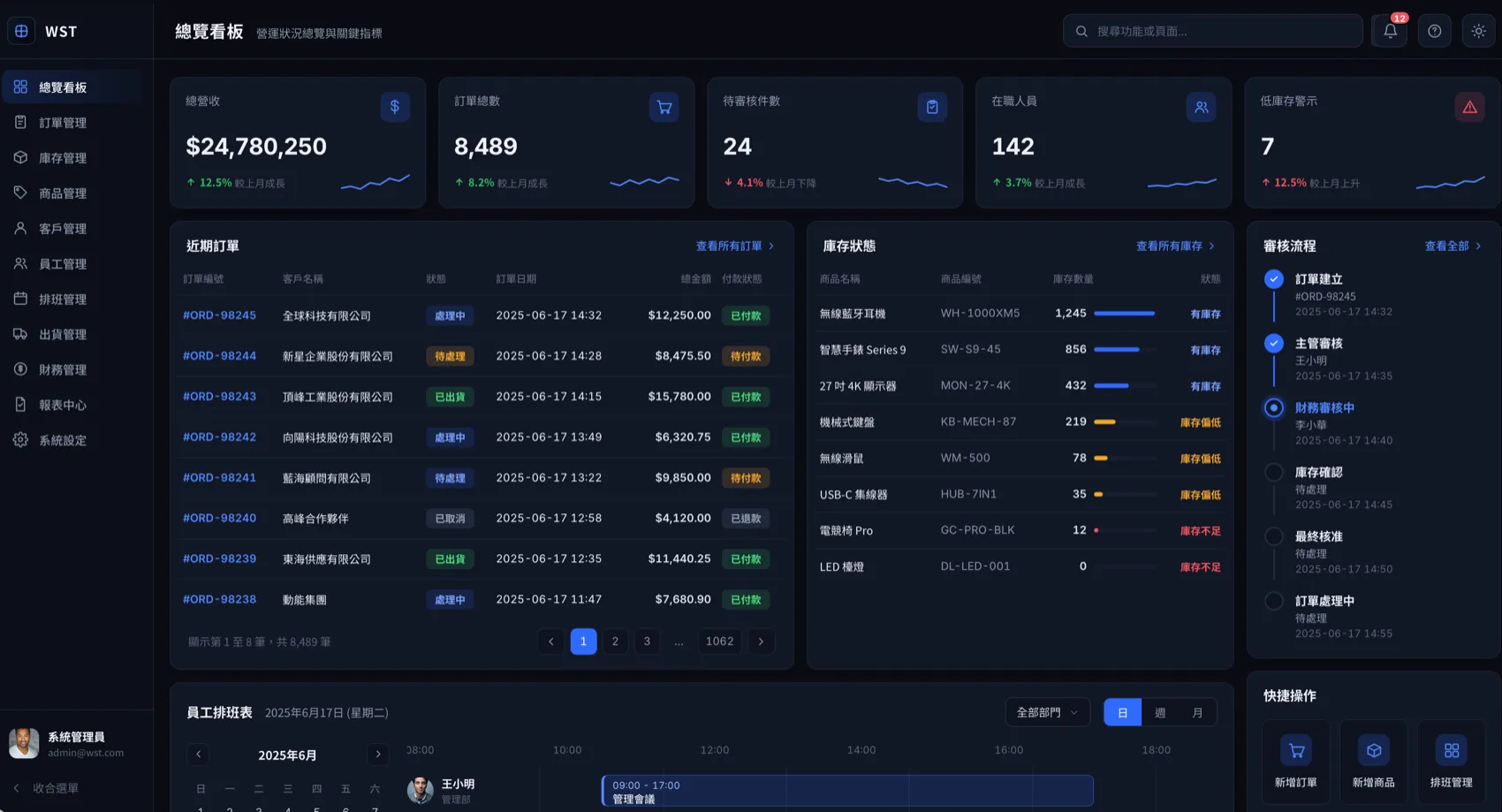
03System Development
Operations back-office platform
Orders, inventory and staffing in one place.
FAQ
That is exactly what custom systems are for: built around your real workflow instead of bending it to packaged software. We map the process first, then build in verifiable stages.
Small systems run 4–8 weeks. Larger ones ship in stages — each stage is a working version you can actually use, not a promise.
Yes — migration is standard procedure: rehearsed and reconciled in a test environment first, with the old system kept running in parallel as insurance.
Yes. Every stage ends with a version you can actually use rather than a percentage on a status report. You can try it early and raise issues early, instead of discovering a mismatch at final sign-off.
Yes — and we usually recommend it. Pick the most painful workflow, ship it as a working version, run it for a while to confirm the direction, then decide whether to extend it to other teams.
Your call. Delivery includes full source code and technical documentation, so your own engineers can take over. If you would rather not staff for it, we offer a maintenance agreement covering monitoring, updates and incident response.
Undefined scope boundaries: halfway through, an integration with some existing system surfaces, or a department nobody consulted turns out to have its own workflow. We map integration points, data sources and stakeholders during scoping and write them into the quote, so the boundary is explicit before work starts.
Ready to get started?
Start a project