Cloud Infrastructure
Solid data architecture is what keeps systems running.
We design database architecture, deploy servers and operate cloud environments, keeping systems stable and performant as data grows.
How it works
We choose cloud or self-hosted infrastructure based on scale and budget, design the database schema and backup strategy, then monitor performance continuously and adjust the architecture as data grows.
What this covers
- Database architecture design and optimisation (PostgreSQL, MySQL)
- Server deployment and setup (Linux, Docker)
- Cloud resource planning (AWS/GCP/Cloudflare)
- Backup and disaster recovery
- Performance monitoring and operations
Example project
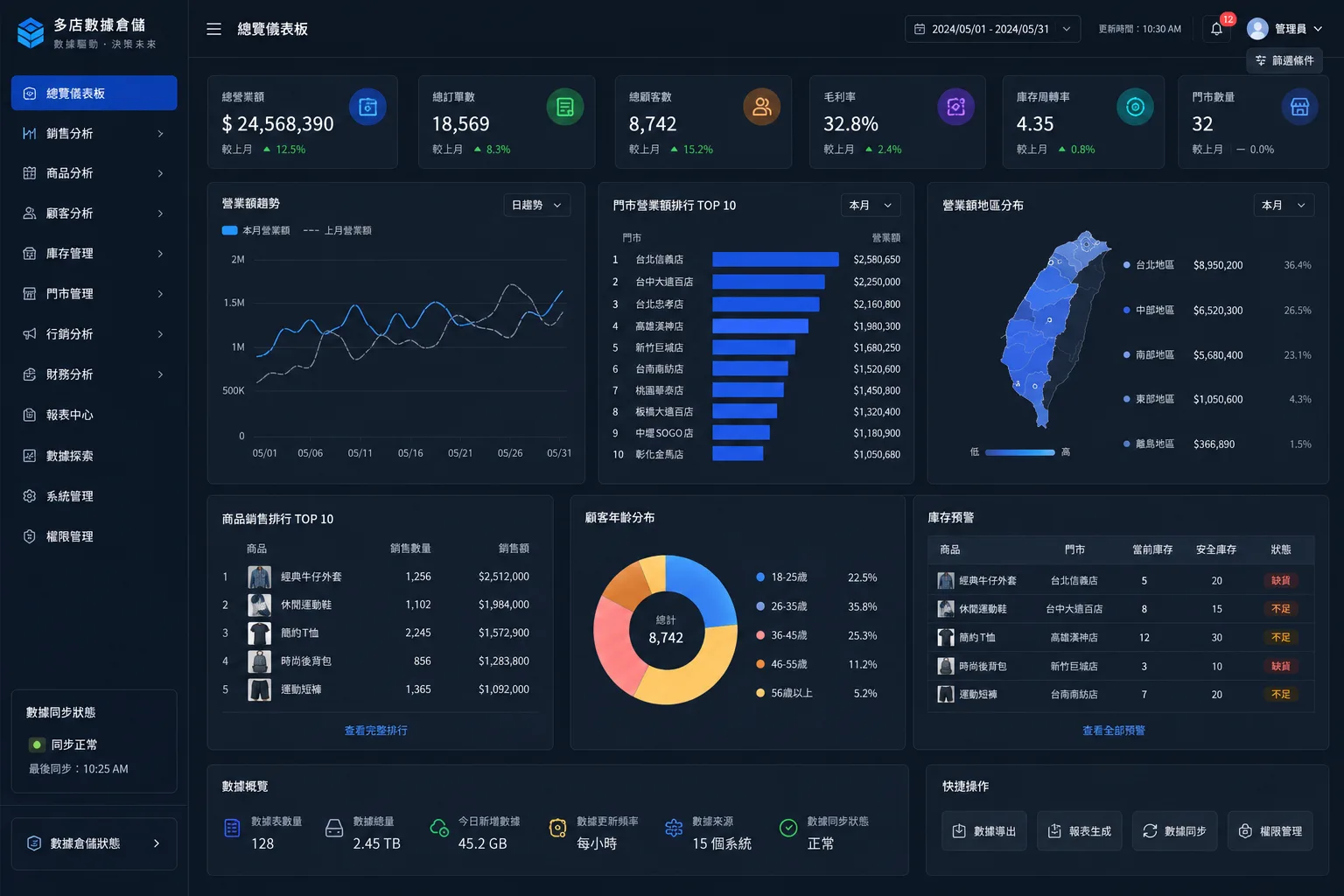
DTCloud Infrastructure
Multi-store data warehouse
Consolidating scattered operational data into one source of truth.
FAQ
Yes — from tuning and backup for a single database to multi-store data warehouses and automated reporting pipelines.
Absolutely — cleanup and normalisation is the most common starting point. We map the sources, then automate the cleaning so it never degrades again.
Scheduled backups plus rehearsed restores are our baseline — we don’t just back up, we practise recovery so it actually works when needed.
Tuning and backup planning for a single database runs 1–2 weeks; cross-system consolidation and reporting pipelines take 3–8, depending on how many sources there are and what condition the data is in. You get a firm estimate once we have audited the current state.
Yes — and it is often the single most worthwhile place to start. We inventory where your data lives and how critical each part is, design the backup strategy, then run an actual restore drill to prove recovery works.
With proper planning, almost none. The standard approach runs both environments in parallel, syncs the data, then shifts traffic after full verification — with an immediate rollback path if anything looks wrong. Cutover is scheduled for off-peak hours.
Flat permissions with everyone sharing one admin account: when something breaks there is no way to tell who changed what, and offboarding leaves access open. We set least-privilege roles and enable audit logging so every action traces back to a person.
Ready to get started?
Start a project